
The Emerging Proposal
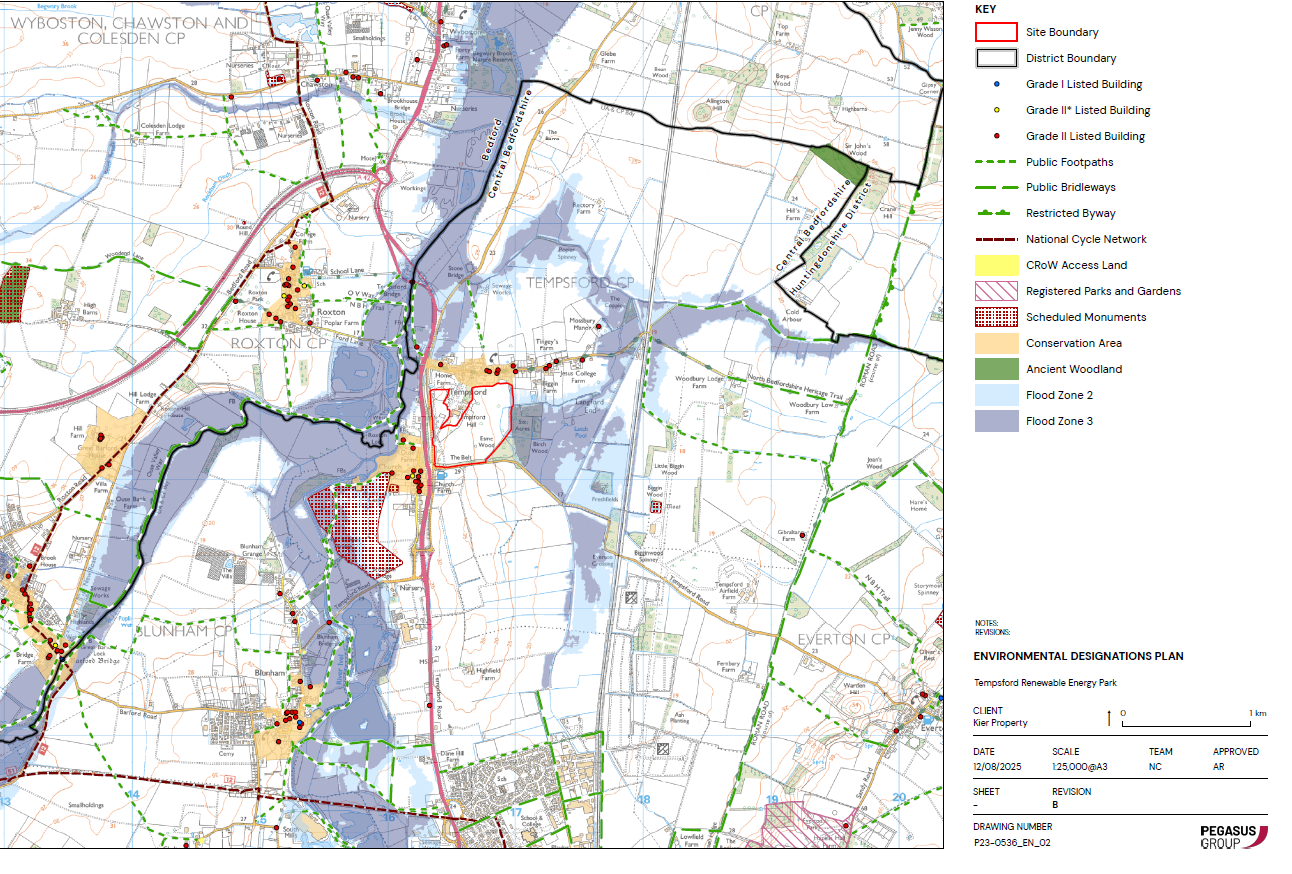
Site boundary and context plan
Introduction
National Grid expects that peak demand for electricity will significantly increase with additional demands from businesses, homes and the switch from petrol to electric vehicles.
Moreover, The UK government has introduced a ban on the sale of new petrol and diesel cars and small vans from 2030 through the Zero Emission Vehicle Mandate. As the UK transitions from a fossil-fuel led economy to a net zero one powered by clean, green, renewable energy, the demand for electric vehicles will continue to increase rapidly.
The renewable energy park contains three main elements: the solar panels, the electric vehicle charging station and the battery energy storage system.
Sunlight shines on the solar panels which generate electricity that will supply the electric vehicle charging station, on-site batteries and the National Grid.
Solar Panels
The solar panels would generate up to 9.4 MW of electricity. That electricity generated each year would be equivalent to the electricity demand of approximately 2,800 average UK homes
The solar farm would comprise:
Solar modules installed on a simple metal framework mounted on piles driven into the ground.
The panels would have a maximum height of up to 3.3 m (existing ground levels would be unaltered).
Associated infrastructure required to generate and supply electricity, including inverters, underground cables, transformers and switchgears.
The metal frames and piles are temporary structures and can be removed once the site is decommissioned in the future.
Battery Storage
Batteries will store electricity to manage the supply of power for the electric vehicle charging station and help the efficient operation of the National Grid by providing grid services. The batteries will have capacity to store 9.4MW of electricity.
Battery storage will be in the form of containers within a fenced compound for safety and security.
The batteries would meet recognised fire safety standards and would be fitted with automatic fire suppression technology.
EV Charging
The EV charging station comprises:
Ultra-rapid (up to 350 kW) and rapid (43-100 kW) charging points for any make or model.
Public rest facilities including a small café/shop.
Why this site?
The site is not located within or adjacent to any statutory landscape or ecological designations. The site is also well screened from the surrounding area and from local residences.
The site is located within a short distance to a local electricity network connection point, allowing electricity generated at source to not have to travel far to feed into the National Grid.
Is it needed?
Since the UK Government announced a ban on the sale of new petrol and diesel cars from 2030, there has been rapidly growing need to build public EV charging infrastructure across the country, infrastructure that will gradually replace the traditional petrol forecourt.
Moreover, there is a legal obligation to decarbonise the UK economy to respond directly to the climate and ecological emergencies. This project will make a tangible contribution to the wider process of decarbonisation, which is good for the economy, vital for national security, and is kind to planet earth.
In July 2019, Central Bedfordshire Council unanimously supported a proposal to prioritise responding to climate change. In September 2024, the Council endorsed its refreshed Sustainability Plan (2023 -2030) which outlines the steps for the Council to become carbon neutral by 2030. It commits the Council to lead by example in investing in sustainability while working with residents, businesses and key partners to do the same.
Timescales
The indicative timeline for the proposal is:
EIA Screening Opinion Request submission – August 2025
Public consultation – Autumn 2025
Planning application submitted – Late 2025/Early 2026